Showing posts with label buddhism. Show all posts

The Snow Lion and the Dragon: China, Tibet, and the Dalai Lama Review

The Snow Lion and the Dragon: China, Tibet, and the Dalai Lama
Average Reviews:

(More customer reviews)
Are you looking to buy The Snow Lion and the Dragon: China, Tibet, and the Dalai Lama? Here is the right place to find the great deals. we can offer discounts of up to 90% on The Snow Lion and the Dragon: China, Tibet, and the Dalai Lama. Check out the link below:

>> Click Here to See Compare Prices and Get the Best Offers

The Snow Lion and the Dragon: China, Tibet, and the Dalai Lama ReviewBear in mind that my background in Chinese and Tibetan history and politics is negligible. And that the fate of the Tibetan people is being considered. That said, this seemed at least a very readable account. I assume the historical facts in this book can be cross-checked for accuracy. As to Goldstein's analysis (done before 1998) of the future, he explored possibilities for compromise that, to date, seem not to have occurred. He also expresses concern about the possibility of further violence if an adequate compromise is not reached.
When looking into the Tibetan problem, I found primarily decidedly pro-Chinese or pro-Tibetan positions. Compromise may seem unreasonable. Since Goldstein appears to be trying to find a middle position, this book may be useful for anyone trying to get a less biased view of this issue. The presentation seemed clear enough that it could serve as an introduction to this issue, although it may well also be of use to readers with a more advanced background in this area. Goldstein seems to be primarily offering input and not conclusions, so whatever your position on the Tibet issue, this book may be informative.The Snow Lion and the Dragon: China, Tibet, and the Dalai Lama Overview

Want to learn more information about The Snow Lion and the Dragon: China, Tibet, and the Dalai Lama?

>> Click Here to See All Customer Reviews & Ratings Now
Read More...

The Analects of Confucius : A Philosophical Translation (Classics of Ancient China) Review

The Analects of Confucius : A Philosophical Translation (Classics of Ancient China)
Average Reviews:

(More customer reviews)
Are you looking to buy The Analects of Confucius : A Philosophical Translation (Classics of Ancient China)? Here is the right place to find the great deals. we can offer discounts of up to 90% on The Analects of Confucius : A Philosophical Translation (Classics of Ancient China). Check out the link below:

>> Click Here to See Compare Prices and Get the Best Offers

The Analects of Confucius : A Philosophical Translation (Classics of Ancient China) ReviewThe only translation that is a pleasure to read for both its language and its profundity. Ames and Rosemont bury the stodgy old Confucius and introduce us to a vibrant thinker--the kind of intellectual magnet that attracted hundreds of followers in his own time and millions throughout history. Although their choice of translation for key Confucian terms may seem unorthodox, consider where our 'orthodox' translations have come from. They have come from translators with a knowledge of the Classical Chinese language but all of the built in presuppositions of Western (Christian and essentialistic) thinking (including, surprisingly, D.C. Lau). Since the standard translations (Legge, Waley, Lau), there have been great strides in understanding the philosophy of Confucius' time. Ames and Rosemont are not only experts in the language but are at the cutting edge of ancient Chinese philosophy. This book questions many basic presumptions about Confucius' philosophy and deserves thoughtful consideration.The Analects of Confucius : A Philosophical Translation (Classics of Ancient China) Overview

Want to learn more information about The Analects of Confucius : A Philosophical Translation (Classics of Ancient China)?

>> Click Here to See All Customer Reviews & Ratings Now
Read More...

Zen Sourcebook: Traditional Documents from China, Korea, and Japan Review

Zen Sourcebook: Traditional Documents from China, Korea, and Japan
Average Reviews:

(More customer reviews)
Are you looking to buy Zen Sourcebook: Traditional Documents from China, Korea, and Japan? Here is the right place to find the great deals. we can offer discounts of up to 90% on Zen Sourcebook: Traditional Documents from China, Korea, and Japan. Check out the link below:

>> Click Here to See Compare Prices and Get the Best Offers

Zen Sourcebook: Traditional Documents from China, Korea, and Japan ReviewThere are, of course, many collections that document the early days of Ch'an/Zen Buddhism. This is the first I've seen that includes talks and writings of Korean masters, as well as those from China and Japan.
The editors have created new translations of many of the texts. I found these translations to be energetic and spacious, opening new vistas into some of these old cases and records.
I read the book cover to cover and discovered a remarkable unity of teaching across tradition and country. Here's one excerpt, from the writings of the seminal Korean teacher, Chinul:
"The three worlds are burning with suffering like a house on fire. How long can we endure this? The best way to escape the wheel of suffering is to seek Buddhahood, but before you seek Buddhahood you should know that Buddha is nothing but your own mind. Do not look for your mind far away: it is within this body of yours."
Finally, the brief introduction contains the best short history of Zen that I've ever seen. Every serious Zen student should read this book, cover to cover.
[...]Zen Sourcebook: Traditional Documents from China, Korea, and Japan Overview

Want to learn more information about Zen Sourcebook: Traditional Documents from China, Korea, and Japan?

>> Click Here to See All Customer Reviews & Ratings Now
Read More...

Appetites: Food and Sex in Post-Socialist China (Body, Commodity, Text) Review

Appetites: Food and Sex in Post-Socialist China (Body, Commodity, Text)
Average Reviews:

(More customer reviews)
Are you looking to buy Appetites: Food and Sex in Post-Socialist China (Body, Commodity, Text)? Here is the right place to find the great deals. we can offer discounts of up to 90% on Appetites: Food and Sex in Post-Socialist China (Body, Commodity, Text). Check out the link below:

>> Click Here to See Compare Prices and Get the Best Offers

Appetites: Food and Sex in Post-Socialist China (Body, Commodity, Text) ReviewFarquhar has written a very good book in Appetites. Drawing from conversations, anecdotes, advertising, and--above all--novels, Farquhar is somehow able to convincingly trace a changing subjectivity in China. Never grandiose in her claims, Farquahar addresses this fact: China is changing rapidly, and with its political and economic realignments Chinese personhood is changing too. Careful never to construct a unified "Chinese" experience, the author instead describes mere footprints of an untrapable beast.
She finds in China a subjectivity moving away from, but never forgetting, its histories of socialism and famine. Indeed, eating is a practice through which such histories are thought about, reproduced, and critiqued. Habits, memories, nostalgia, and modernity jostle for positions on contemporary Chinese platters.
At times, the reader may long for more sustained evidence and thicker ethnography. And yet such irritation is inevitably calmed by the author's soothing prose and gentle claims. Unlike some of the medicine ads appearing in Appetites, the author never claims to be providing all of the answers to the body of China.
Farquhar's reading of the changing personage of Lei Feng is striking. She shows that this hero of the revolution has (at least partly) transformed from an image of self-sacrifice, duty, and community, to one now capable of hailing an individual consumer, who can define one's self-centered spending on health as ultimately beneficial to the group. Indeed, the production of such individuality, Farquhar shows, has been necessary to make the segue into new sexual discourses.
Farquhar shows that food, medicine, and sex can never be fully teased apart in China-indeed, they are often blended together so as to whet the appetites.Appetites: Food and Sex in Post-Socialist China (Body, Commodity, Text) Overview

Want to learn more information about Appetites: Food and Sex in Post-Socialist China (Body, Commodity, Text)?

>> Click Here to See All Customer Reviews & Ratings Now
Read More...

Zen Baggage: A Pilgrimage to China Review

Zen Baggage: A Pilgrimage to China
Average Reviews:

(More customer reviews)
Are you looking to buy Zen Baggage: A Pilgrimage to China? Here is the right place to find the great deals. we can offer discounts of up to 90% on Zen Baggage: A Pilgrimage to China. Check out the link below:

>> Click Here to See Compare Prices and Get the Best Offers

Zen Baggage: A Pilgrimage to China ReviewZen Baggage: A Pilgrimage to China by Bill Porter is a tedious travelogue told by a grumpy old man. However, as he carries his baggage of tea and books through the interior of China, Porter slowly reveals himself to be a man of Zen as I understand his understanding of Zen: a mind at work in the everyday world.
Meditating makes Porter's knees hurt, and he actually prefers being on the outside of the meditation hall. And although respecting the ceremonies and rituals practiced by the Zen Buddhist monks and nuns, he'd much rather take a nap.
In the everyday world, Porter grumbles about headaches, backaches, and allergies to dust as he travels by bus, train, taxi, motorcycle, mini-van, or tractor through frigid cold, tropical heat, or torrential rain. But before it all becomes too tiresome, he finds a delicious pumpkin cookie, a skillful masseuse, or an impressive PhD student who peels mangoes for him with a Uighur knife pulled from her boot.
Porter enjoys wild mushrooms, hot baths, gooseberry wine, afternoon naps, Iron Goddess tea, and an occasional fun-sized Snickers -- all providing much-needed breaks from his traveling and journaling. Writing about his pilgrimage to the ancient temples and grave sites of Zen patriarchs, Porter brings to light his mind, a mind at work in the everyday world, the everyday world of China, that is.
Along roads that end in dusty wasteland or muddy ruts, he is one porter who carries his Zen baggage lightly. And who's to say that Bodhidharma wasn't just another grumpy old man from the West?Porter, Bill. Zen Baggage: A Pilgrimage to China. Berkeley: Counterpoint, 2009.Zen Baggage: A Pilgrimage to China Overview

Want to learn more information about Zen Baggage: A Pilgrimage to China?

>> Click Here to See All Customer Reviews & Ratings Now
Read More...

The Surangama Sutra (Leng Yen Ching: Chinese Rendering by Master Paramiti of Central North India at Chih Chih Monastery, Canton, China, Ad 705 Review

The Surangama Sutra (Leng Yen Ching: Chinese Rendering by Master Paramiti of Central North India at Chih Chih Monastery, Canton, China, Ad 705
Average Reviews:

(More customer reviews)
Are you looking to buy The Surangama Sutra (Leng Yen Ching: Chinese Rendering by Master Paramiti of Central North India at Chih Chih Monastery, Canton, China, Ad 705? Here is the right place to find the great deals. we can offer discounts of up to 90% on The Surangama Sutra (Leng Yen Ching: Chinese Rendering by Master Paramiti of Central North India at Chih Chih Monastery, Canton, China, Ad 705. Check out the link below:

>> Click Here to See Compare Prices and Get the Best Offers

The Surangama Sutra (Leng Yen Ching: Chinese Rendering by Master Paramiti of Central North India at Chih Chih Monastery, Canton, China, Ad 705 ReviewThis text is a meaningful guide to Mahayana meditation practice. The Famous Ming Ch'an (Zen)master, Han-shan, used the Surangama Sutra to check his own progress with meditation - and wrote an extensive commentary on its practical meaning. What makes this particular translation valuable, is that incor-porates key-elements from Master Han-shan's commentary.
The Surangama Sutra is very complementary to the Lankavatara Sutra, explaining much left unexplained, in the former - concerning the role of the 'Alaya-vijnana' (store conscious-ness). In the Surangama Sutra, the Buddha asks twenty five bodhisattvas to outline their favoured methods of meditation, which all converge - insofar as they entail transforming sense-data into wisdom, breaking up the influence of the alaya
or 'store consciousness' - to reveal the true mind.
This all quite practical. It is impossible to concentrate on - and sublimate,all six sense-organs and sense data, at once. Skilfully, then, this sutra teaches that - if one source of sense/data is sublimated - the other five will also be subli-mated, for they share one and the same root. Each Bodhisattva thus details a method of meditation, focusing on sight, touch, taste etc. The method most praised by the Buddha - and reco- mmended for the present Dharma-age,is that of sublimating the sense of 'hearing' - as advocated by Avalokitesvara. The sense of 'hearing' is the most pervasive, and therefore, likely to maximize the opportunity for insight. Viewed negatively, of course - the impact of 'sound,' unwelcome 'noise,' is what many meditators wish to avoid, most of all. It is fascinating then, to find that it is this very 'devil' - which has been singled out - as especially helpful. It blows large holes in the misguided notion that Buddhist meditation is about AVOIDING sense data. It is not - it is about SUBLIMATING sense data. In fact, eminent masters like Han-shan purposely chose to prac-tice by roaring cataracts - to develop their meditation. The optimistic note here, then, is that very the 'things' which SEEM to be obstacles to Buddhist meditation, may well prove to be the biggest boon, if we direct our meditation aright. This is brilliant stuff and pre-eminently useful. It helps explain those Ch'an (Zen) stories, recounting experiences of awakening, upon the impact of a random noise, shout etc. But this has its own dynamic. Without the direct 'inner-cause' - the inner potentiality aroused by Ch'an or parallel methods, no amount of external 'causes' could trigger enlightenment).
The Surangama Sutra (Leng Yen Ching: Chinese Rendering by Master Paramiti of Central North India at Chih Chih Monastery, Canton, China, Ad 705 Overview

Want to learn more information about The Surangama Sutra (Leng Yen Ching: Chinese Rendering by Master Paramiti of Central North India at Chih Chih Monastery, Canton, China, Ad 705?

>> Click Here to See All Customer Reviews & Ratings Now
Read More...

Out of the Cloister: Literati Perspectives on Buddhism in Sung China, 960-1279 (Harvard East Asian Monographs) Review

Out of the Cloister: Literati Perspectives on Buddhism in Sung China, 960-1279 (Harvard East Asian Monographs)
Average Reviews:

(More customer reviews)
Are you looking to buy Out of the Cloister: Literati Perspectives on Buddhism in Sung China, 960-1279 (Harvard East Asian Monographs)? Here is the right place to find the great deals. we can offer discounts of up to 90% on Out of the Cloister: Literati Perspectives on Buddhism in Sung China, 960-1279 (Harvard East Asian Monographs). Check out the link below:

>> Click Here to See Compare Prices and Get the Best Offers

Out of the Cloister: Literati Perspectives on Buddhism in Sung China, 960-1279 (Harvard East Asian Monographs) ReviewThis book is a model work of fine scholarship. Halperin has taken up some overlooked and understudied sources and explored them in depth and at length for what they tell us about the relationship between literati and Buddhist temples during the Sung dynasty, complicating previous assumptions about that relationship in the process. Instead of falling into the common pitfall of much academic writing today (grand sweeping theoretical generalizations and endless methodological mullings), he builds his case carefully and gradually from these primary sources, commemorations for temple renovation projects written by literati at the request of Buddhist monks. Confining his study to this one genre gives the book focus, but also proves intriguing in that by considering these scattered and various commemorations, a genre one might assume to be generic and dull with little to tell us, he uncovers patterns and paradoxes while unearthing large swaths of social history and significant shifts in religious attitudes and institutional development--and by the end of it, you'll never be able to blithely characterize the dynasty simplistically as one of Confucian rise and Buddhist fall ever again.
There are a lot of little things about the book too that stand out. The one chapter on T'ang dynasty commemorations serves its purpose of contrasting with the Sung dynasty commemorations so as to highlight the latter's unusual characteristics, but it's also interesting in and of itself in showing the educated layman's grasp of Buddhist doctrine and devotion to Buddhist deities. The mutual interpenetration of Buddhism and the Imperial cult, the degree to which Sung Emperors were divinized, and the role of Buddhist temples throughout the empire in establishing commoner consciousness of the political/religious center were all new and fascinating topics (for me, at least). And it was nice to get a glimpse of the lives and ideas of literati not on the "top ten list"--educated and politically active men of some distinction other than Chu Hsi, Chou Tun-i, or the Ch'eng brothers--not that these latter guys aren't interesting or important, but with this book I got a more concrete sense of how their ideas were affecting their peers and society at large.
Prospective readers of this fine book should keep in mind that it is a pretty specialized study in some ways. As someone with some familiarity with East Asian history and religion, I still found that Halperin was assuming knowledge on his reader's part that I didn't have (or did have but in a fuzzy, vague state). Most of this had to do with the ups and downs of Sung history, and if you're rusty on this you might want to give yourself a quick review. Also, he keeps referring to what I would identify as "Neo-Confucianism" with the term "Tao-hsueh"--I'm not sure what is at stake in not using the standard English term, but perhaps there are good reasons (why not then be consistent and render "Buddhism" in Chinese as well?)--if so, a quick explanation of the reasoning behind this terminological choice may have been in order, at least in a footnote, for the sake of those of us not "in the know". None of this detracts from the book, of course, and the author's overall argument is still quite clear if you have a reasonable level of background knowledge.
In short, this is a valuable and well-written study grounded in extensive and careful work with primary texts all substantiating an important, overarching point. Anyone curious about how Buddhism actually functions in society should find it indispensable.Out of the Cloister: Literati Perspectives on Buddhism in Sung China, 960-1279 (Harvard East Asian Monographs) Overview

Want to learn more information about Out of the Cloister: Literati Perspectives on Buddhism in Sung China, 960-1279 (Harvard East Asian Monographs)?

>> Click Here to See All Customer Reviews & Ratings Now
Read More...

Religions of China in Practice Review

Religions of China in Practice
Average Reviews:

(More customer reviews)
Are you looking to buy Religions of China in Practice? Here is the right place to find the great deals. we can offer discounts of up to 90% on Religions of China in Practice. Check out the link below:

>> Click Here to See Compare Prices and Get the Best Offers

Religions of China in Practice ReviewReligions of China in Practice is a wonderful smorgasbord of philosophy, religious stories, poetry and history. The editor sets out to provide an overview of the three main religious traditions of China: Buddhism, Confuciansism and Daoism. This is accomplished with a pastiche of short readings. Readings are arranged according to content rather than by religion and fall into four categories. Sections cover the "Unseen World", human relations with the "Unseen world" (including communication and ritual) and the conduct of day to day affairs.
Each passage is individually translated, and is accompanied by a short introduction furnished by the translator. Fairly extensive additional reading lists are provided at the end of each reading and provide a valuable resource if your interest is piqued by a particular piece. A very extensive general introduction ties the entire book together and provides background information for readers of general interest, who are not scholars in the field of eastern religion.
I, myself, am not a scholar in eastern religion and come to the field mainly through general interest. I was therefore pleasantly surprised at the readability of this book. Some of the poetic pieces (for example - The Seduction Songs of the Perfected) were exquisitely beautiful. Other passages, while less stirring provided me with a clearer understanding of the intricate relationships between the religions of China; something I have often found difficult to understand. I would highly recommend this book to those with more than a passing interest in eastern religion. Although I am not necessarily qualified to speak, I suspect it would also be an invaluable resource to the serious student, given its fairly extensive scholarly accoutrements. Personally, I am looking forward to reading the other books in this collection.Religions of China in Practice Overview

Want to learn more information about Religions of China in Practice?

>> Click Here to See All Customer Reviews & Ratings Now
Read More...

Tragedy in Crimson: How the Dalai Lama Conquered the World but Lost the Battle with China Review

Tragedy in Crimson: How the Dalai Lama Conquered the World but Lost the Battle with China
Average Reviews:

(More customer reviews)
Are you looking to buy Tragedy in Crimson: How the Dalai Lama Conquered the World but Lost the Battle with China? Here is the right place to find the great deals. we can offer discounts of up to 90% on Tragedy in Crimson: How the Dalai Lama Conquered the World but Lost the Battle with China. Check out the link below:

>> Click Here to See Compare Prices and Get the Best Offers

Tragedy in Crimson: How the Dalai Lama Conquered the World but Lost the Battle with China ReviewI had followed the events in Tibet for many years, but until I read this book, I had little idea of that these people went through and are still going through. It makes me wonder how the Dalai Lama can be so popular and awesome outside his country of origin. I learned how difficult change is, how isolation protects, how modern civilization like trains and roads can result in changes unanticipated and unwanted!Tragedy in Crimson: How the Dalai Lama Conquered the World but Lost the Battle with China Overview

Want to learn more information about Tragedy in Crimson: How the Dalai Lama Conquered the World but Lost the Battle with China?

>> Click Here to See All Customer Reviews & Ratings Now
Read More...

The Making of a Savior Bodhisattva: Dizang in Medieval China (Studies in East Asian Buddhism) Review

The Making of a Savior Bodhisattva: Dizang in Medieval China (Studies in East Asian Buddhism)
Average Reviews:

(More customer reviews)
Are you looking to buy The Making of a Savior Bodhisattva: Dizang in Medieval China (Studies in East Asian Buddhism)? Here is the right place to find the great deals. we can offer discounts of up to 90% on The Making of a Savior Bodhisattva: Dizang in Medieval China (Studies in East Asian Buddhism). Check out the link below:

>> Click Here to See Compare Prices and Get the Best Offers

The Making of a Savior Bodhisattva: Dizang in Medieval China (Studies in East Asian Buddhism) ReviewMost Chinese know Dizang only as the patron saint of the dead presiding over the temple rites during the seventh lunar month, the season of the dead in the Chinese liturgical calendar. But few really know the formative phase of his cult in medieval China. Zhiru's book fills in this gap excellently. One strength of this study is the way it resolutely resists easy, reductionist characterization of religious development. All the old stereotypes are expertly deconstructed. Instead, foraying through an admirably broad corpus of materials, both literary and visual as well as non-canonical and canonical, the book successfully captures the dynamic fluidity of the making of Chinese Buddhism. The conclusion offers deep insights into the place of Buddhist cults in Tang religion and society. The book is also a superb storehouse of information about Dizang in China, as well as in India, Central Asia, and other parts of East Asia.The Making of a Savior Bodhisattva: Dizang in Medieval China (Studies in East Asian Buddhism) Overview

Want to learn more information about The Making of a Savior Bodhisattva: Dizang in Medieval China (Studies in East Asian Buddhism)?

>> Click Here to See All Customer Reviews & Ratings Now
Read More...

The Buddhist Conquest of China (Sinica Leidensia) Review

The Buddhist Conquest of China (Sinica Leidensia)
Average Reviews:

(More customer reviews)
Are you looking to buy The Buddhist Conquest of China (Sinica Leidensia)? Here is the right place to find the great deals. we can offer discounts of up to 90% on The Buddhist Conquest of China (Sinica Leidensia). Check out the link below:

>> Click Here to See Compare Prices and Get the Best Offers

The Buddhist Conquest of China (Sinica Leidensia) ReviewStill not yet replaced and often cited in contemporary works, it is good news that Brill has decided to republish the 1972 edition (a reprint of the original 2 volume, 1959 edition with "additions and corrections") of this work, with a new, additional introduction by Stephen Teiser, and perhaps combining the text and notes as a single volume. The anticipated publication date is Autumn 2006.The Buddhist Conquest of China (Sinica Leidensia) Overview

Want to learn more information about The Buddhist Conquest of China (Sinica Leidensia)?

>> Click Here to See All Customer Reviews & Ratings Now
Read More...

My Journey in Mystic China: Old Pu's Travel Diary Review

My Journey in Mystic China: Old Pu's Travel Diary
Average Reviews:

(More customer reviews)
Are you looking to buy My Journey in Mystic China: Old Pu's Travel Diary? Here is the right place to find the great deals. we can offer discounts of up to 90% on My Journey in Mystic China: Old Pu's Travel Diary. Check out the link below:

>> Click Here to See Compare Prices and Get the Best Offers

My Journey in Mystic China: Old Pu's Travel Diary ReviewJohn Blofeld's account of his travels in China during the 1930's & 40's are translated for the first time and it is a cause for celebration for all Sinophiles. His words are a visual canvas of pastels and rich colors, smells, and tastes of a China no longer to be seen. Blofeld comes across as a gentle loving soul that if one were to accept reincarnation as a fact, then this British born man was truly Chinese in his soul. Besides a journal of his travels, he also offers folk stories and accounts of inexplicable sights and people he encountered along the way.
Blofeld is a fine writer of great subtlety and nuance. Normally I am a quick reader but like a fine tea I wanted to savor each page and chapter of this book. The translation by Daniel Reid is superlative. Reid's deep friendship and admiration he cultivated in the last years of Blofeld's life imbues this work with a warmth and charm too little seen in memoirs today.
For those interested in the history of China, Chinese folk life, Taoism, Confucianism or Buddhism this book is recommended. I know this is a work that I will return to every so often like a visit with a good friend and raconteur.My Journey in Mystic China: Old Pu's Travel Diary Overview

Want to learn more information about My Journey in Mystic China: Old Pu's Travel Diary?

>> Click Here to See All Customer Reviews & Ratings Now
Read More...

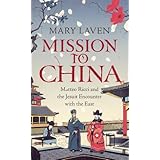
Mission to China: Matteo Ricci and the Jesuit Encounter with the East Review

Mission to China: Matteo Ricci and the Jesuit Encounter with the East
Average Reviews:

(More customer reviews)
Are you looking to buy Mission to China: Matteo Ricci and the Jesuit Encounter with the East? Here is the right place to find the great deals. we can offer discounts of up to 90% on Mission to China: Matteo Ricci and the Jesuit Encounter with the East. Check out the link below:

>> Click Here to See Compare Prices and Get the Best Offers

Mission to China: Matteo Ricci and the Jesuit Encounter with the East ReviewNo doubt motivated by growing international interest in China, two books have just come out (2011) on Matteo Ricci, the Jesuit who took residence in Beijing in 1601 and the first European to do so since Marco Polo. These two books, however, give a quite different treatment to their material. Po-Chia Hsia's A Jesuit in the Forbidden City is essentially a biography of Ricci, while Mary Laven's Mission to China is a book about cultural encounters. The results are interestingly complementary even if, or perhaps especially because, the books occasionally clash, whether in their overall portrayal of the famous Jesuit or in their rendering of specific scenes. (A comparative review of both books follows.)
A Jesuit in the Forbidden City has now become the most up-to-date and complete biography of Ricci (it certainly isn't the first). Tracing Ricci's life from his birth in Macerata in the Papal States to his death in Beijing, this offers an exhaustive if traditional account of the missionary's life and accomplishments. Hsia has given close attention to the Italian and Latin material, which are the most abundant, but his advantage is that he is able to read Chinese, and he has managed to unearth new snippets from Ming gazettes and other contemporary materials - this is all the more important that the source material is unsurprisingly weighted towards Ricci's own writing, with all the distortions and gaps this implies. Hsia was also prepared to delve more thoroughly than was done before into the lives of the various Chinese protagonists, and he sheds new light on key turning points in the mission's progress, for example the Jesuit's crucial first permanent move to Zhaoqing. He is able to provide extra background on the intellectual equipment, Buddhist and Confucian, of many of Ricci's interlocutors, bringing to life debates which, in the Jesuit's published Journal, are given an expectedly one-sided treatment. Hsia's Epilogue, finally, tracing Ricci's legacy from his death to the present, is particularly forceful and interesting.
For all the scholarly quality of A Jesuit in the Forbidden City, though, Laven would disagree (up to a point) with its portrayal of the Ricci mission. Mission to China places its argument both within the historical debate on Ricci - to what extent Ricci was intellectually honest with the Chinese in adapting Christianity to the Confucian philosophy cherished by the mandarins who were his friends, supporters, and patrons - and without it. Ricci was undoubtedly a man of exceptional intelligence: he was capable, after all, not just of learning Chinese but of holding his own in debates with China's intellectual elite, scholars and men who had gone through the most competitive and difficult examination process ever conceived, or of performing such feats as reciting the Confucian classics backwards and writing books on mathematics in his hosts' language. But Laven argues this has mislead historians into giving too much credit to his mission's intellectual dimension and not enough to the role of objects, shared social norms, and images. Hers is a wider point about cultural dialogue, and East-West dialogue in particular: 'We therefore cannot limit the history of encounter to the history of encounter between learned ideas [...] We need to acknowledge a world of rituals, images, and objects, which often speak more eloquently about the interplay between East and West than the learned texts for which the missionaries became famous.' (Mission to China, page 30).
Laven's book is more entertaining if less thorough in discussing Ricci's life than A Jesuit in the Forbidden City. Beginning with a weird and disquieting Soviet secret-service geographical survey of Cambridge, it make a whole set of unexpected points about the meeting of cultures past and present. It goes through, for example, the Jesuits' shopping list for the Chinese emperor, complete with ostrich feathers, astrolabes, fabric cuts, and folding screen, drawing intriguing conclusions as to the Jesuits' keen sense of dress. It shows how European and Ming Chinese notions of friendship curiously intersected at the time of Ricci's mission, and pays close attention to the role of gifts within them. It also explains how coincidental booms in book-printing in Europe and China aided the Jesuits. And it ultimately demystifies Ricci, though without necessarily subtracting from his achievements. A Jesuit in the Forbidden City and Mission to China are likely to appeal to different readers, and Hsia's biography may be essential for students looking for a full and complete chronological account, but they form a wonderful pair: challenging, interesting, and colourful.Mission to China: Matteo Ricci and the Jesuit Encounter with the East Overview

Want to learn more information about Mission to China: Matteo Ricci and the Jesuit Encounter with the East?

>> Click Here to See All Customer Reviews & Ratings Now
Read More...