Showing posts with label greater taiwan. Show all posts

China to Me Review

China to Me
Average Reviews:

(More customer reviews)
Are you looking to buy China to Me? Here is the right place to find the great deals. we can offer discounts of up to 90% on China to Me. Check out the link below:

>> Click Here to See Compare Prices and Get the Best Offers

China to Me ReviewChina to Me opens a fascinating window into China during the most turbulent era in its modern history. Emily Hahn, a correspondent for the New Yorker, arrived in Shanghai in 1935, looking for fun, adventure, and the subject of her next book. She wound up staying in China until 1943. This autobiographical narrative of her Chinese sojourn falls into three parts: her five years in Shanghai from 1935 to 1939; a year of writing in Chungking (Chongqing) in 1940; and three years in Hong Kong from 1940 to 1943.
Hahn's stayed in Shanghai the longest, although her narration of her time there constitutes the shortest portion of the book. She reveled in the comparatively free and open social atmosphere of the European concessions. She conducted a celebrated affair with a Chinese poet, Sinmay Zau (Shao Xunmei), with whom she also ran a left-wing English-language newspaper; she even became his official concubine. She also purchased a Gibbon ape whom she named "Mr. Mills" and who accompanied her to society parties.
Hahn was not a political writer. Or, perhaps better, her politics were refracted through her personal relations. She visited Nanking (Nanjing) a year prior to the Nanking Massacre. She remarks in passing on the Marco Polo Bridge incident, but assumes that her readers will already know all about it. (This may not be true of contemporary readers, for whom these events have become distant history.) Hahn excelled at describing her conversations with Japanese spies, British officers' wives, and Chinese volunteers. At a time when classes, genders, and races were still socially stratified, Hahn delighted in breaking with convention.
She traveled to Hong Kong and then to Chungking after receiving permission to write an authorized biography of the famous Soong sisters. Chungking had become the capital of Free China after the fall of Nanking and was under nearly constant Japanese bombardment. She spent lots of time underground in crowded cave shelters and was rendered homeless after her hotel was destroyed. Hahn still managed to meet regularly with the sisters and to finish her biography, published in 1942.
The greatest part of her narrative is given over to describing her experiences before and after the fall of Hong Kong. Hahn was basically just casting about for her next assignment in Hong Kong when events overtook her. She entered into a romance with Charles Boxer, the (married) head of British intelligence, and had a daughter by him just prior to Hong Kong's fall. The Japanese invasion forced her to live hand-to-mouth under increasingly difficult and perilous circumstances. Hahn provides valuable historical insight into everyday life in Hong Kong under Japanese occupation. She avoided being sent to Stanley Internment Camp by claiming Chinese citizenship as a consequence of her concubine marriage to Zau. Hahn nursed a wounded Boxer back to health and later provided food for him and other interned soldiers at Stanley Camp. She finally left Hong Kong with her daughter, Carola, in 1943 with other repatriated Americans.
China to Me was published in 1944 before the Second World War had come to an end. Hahn's recollections, particularly of Chungking and Hong Kong, are strikingly fresh. She has not had time to process her experiences and sometimes her anger boils over on the pages. But this is autobiography, not history. China to Me deserves--as many others have said--to be rediscovered as a classic first-hand account of life in wartime China.China to Me Overview

Want to learn more information about China to Me?

>> Click Here to See All Customer Reviews & Ratings Now
Read More...

The Generalissimo: Chiang Kai-shek and the Struggle for Modern China (Belknap Press) Review

The Generalissimo: Chiang Kai-shek and the Struggle for Modern China (Belknap Press)
Average Reviews:

(More customer reviews)
Are you looking to buy The Generalissimo: Chiang Kai-shek and the Struggle for Modern China (Belknap Press)? Here is the right place to find the great deals. we can offer discounts of up to 90% on The Generalissimo: Chiang Kai-shek and the Struggle for Modern China (Belknap Press). Check out the link below:

>> Click Here to See Compare Prices and Get the Best Offers

The Generalissimo: Chiang Kai-shek and the Struggle for Modern China (Belknap Press) ReviewI have come upon Jay Taylor's engaging writing only recently when I read his fascinating overview of the world's two most populous nations, China and India in his book "The Dragon and The Wild Goose". The refreshingly unbiased viewpoint of this veteran Foreign Service Officer presents instead of thinly disguised extrapolations of his own canny wisdom and insights, rather a keenly observed journalist's overview of the realities of these complex societies with an objectivity that is both pragmatic and prophetic. When I heard of Taylor's recently released historical overview of Ghiang Kai-shek in the "The Generalissimo", I put it on a must read list, and found it another gem of his factually based analysis(he was given complete access to Chiang's personal journals, as well as many others involved in his epic story). Whoever believes they know, or would like to know, how China arrived at its present, dynamic role on the world stage, you have to read "The Generalissimo" to fully grasp the internecine struggles that engulfed China before, during, and after World War Two. Chiang lost the battle on the mainland to Mao Zedong, retreating to the small island of Taiwan where he continued his struggles to somehow bring a modern, coherent and unified China about. This has not happened in the sense of Taiwan and the mainland politically joined, but Chiang and his sons created a miraclous transformation of a small island into one of modern history's most successful democratic nations, and it seems evident now that the mainland regime rightly would like to emmulate this marvel.
Chiang's long, tumultuous career involved nearly all the major political personalties of the twentieth century - including his own beautiful and beguilling, western educated wife, Madame Chiang. Taylor deftly sketches the many significant players passing across Chiang's stage like Mao Zedong, Zhou Enlai, Roosevelt, Churchill, Stalin, Truman, Generals Stilwell and Marshall, and even Wendell Wilkie who conceivably had a one night tryst with Madame Chiang. And best of all, you travel this remarkable journey in the presence of a reader's most treasured companion, a keenly observing narrator who is questioning but equitable, and objectively sympathetic with a world-wise humor. This is a great read of a wonderous story.William Krause Princeton, NJThe Generalissimo: Chiang Kai-shek and the Struggle for Modern China (Belknap Press) Overview

Want to learn more information about The Generalissimo: Chiang Kai-shek and the Struggle for Modern China (Belknap Press)?

>> Click Here to See All Customer Reviews & Ratings Now
Read More...

The Man Who Lost China: The First Full Biography of Chiang Kai-shek Review

The Man Who Lost China: The First Full Biography of Chiang Kai-shek
Average Reviews:

(More customer reviews)
Are you looking to buy The Man Who Lost China: The First Full Biography of Chiang Kai-shek? Here is the right place to find the great deals. we can offer discounts of up to 90% on The Man Who Lost China: The First Full Biography of Chiang Kai-shek. Check out the link below:

>> Click Here to See Compare Prices and Get the Best Offers

The Man Who Lost China: The First Full Biography of Chiang Kai-shek ReviewThis is an excellent and well researched biography of Chiang Kai-Shek.
It provides insights to a man who in many ways remains an enigma, but this book brings the reader to a much closer understanding
of its subject and the politics and political culture that was and perhaps still exists in China.
The Princelings of today seem to have learnt much from their Elders. I would recommend this book to anyone interested in trying to develop an understanding of Past and Future China.The Man Who Lost China: The First Full Biography of Chiang Kai-shek Overview

Want to learn more information about The Man Who Lost China: The First Full Biography of Chiang Kai-shek?

>> Click Here to See All Customer Reviews & Ratings Now
Read More...

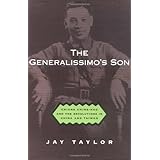
The Generalissimo's Son: Chiang Ching-kuo and the Revolutions in China and Taiwan Review

The Generalissimo's Son: Chiang Ching-kuo and the Revolutions in China and Taiwan
Average Reviews:

(More customer reviews)
Are you looking to buy The Generalissimo's Son: Chiang Ching-kuo and the Revolutions in China and Taiwan? Here is the right place to find the great deals. we can offer discounts of up to 90% on The Generalissimo's Son: Chiang Ching-kuo and the Revolutions in China and Taiwan. Check out the link below:

>> Click Here to See Compare Prices and Get the Best Offers

The Generalissimo's Son: Chiang Ching-kuo and the Revolutions in China and Taiwan ReviewThis is a very important introduction for the West of a remarkable,
and still little understood, Chinese leader.
If Chiang Ching-kuo
(CCK) had survived to lead a unified China, he would be one of the few
non-Westerners who would be extensively written by Western scholars.
(The "twentieth" century, a name that itself implies a
Western perspective on history and time, is of course a history of the
West's triumph over other civilizations. Consequently contemporary
society remembers little of the other great civilizations that have
contributed to the human experience: the Arabic Islamic, the Chinese
(or Sinitic), the Indian, to name the few obvious ones. But I
digress.) Had his father not been the great but tragic Chiang
Kai-shek, whose influence on modern China will forever overshadow his,
CCK would be even more respected in his own right. Had he been
educated in English (the most influential language in the past
century) and lived in a country that was able to engage with the rest
of the world, such as Singapore's Lee Kuan Yew, he would have been
able to let his own views be better known throughout the world, and
thereby improve his chances of a favorable historical review. CCK had
none of that. By the time he reached the pinnacle of power, his arena
was not great and ancient China, but tiny Taiwan, isolated and
ostracized by the rest of the world, and beholden to a far-away
country (the US) which, though arguably well intentioned, was also
quick to sacrifice its interests for geopolitical needs. CCK will
probably never command the attention accorded to a Mao, a Deng, a
Chiang Kai-shek or even a Lee Kuan Yew. Yet to the extent that
Taiwan's separation from the mainland is temporary, CCK's legacy may
yet positively impact the fate of one quarter of humanity.
The
book's greatest strength is its objectivity. The author did not start
by writing a laudatory biography of CCK. Indeed the author does not
disguise any of the Kuomintang's and CCK's cruel misdeeds and follies.
However, in the end the author assesses the man and paints a largely
favorable picture. This is important, for it is a very human picture,
unlike the almost saint-like quality created by CCK's more ardent
supporters, nor the dismissive cold shoulder given by the opposition
("CCK only did this because the Americans forced him to; CCK did
this only for the KMT's own surivival."). Readers will
appreciate the author's description of CCK's Russian experience, which
molded his character, his philosophy and his methods. His struggle
with the KMT right wing is little understood even by many Taiwanese
today, who mistakenly believed that he could have democraticized
Taiwan much earlier without bloodshed. The roles of the United
States, which was not always a true friend, and the Chinese
communists, which was not necessarily always an enemy, are portrayed
in a balanced manner. We learn that, long before Washington broke off
ties with Taipei, CCK had calmly prepared for Taipei's isolation and
its eventual reckoning (reconciliation?) with the mainland. A true
Chinese republic, the first in our history, came of age under his
stewardship. Unlike his father, who wanted to re-create an ancient
China on Taiwan, and unlike his successors, who now want to separate
artificially Taiwan's undeniable links with Chinese civilization, CCK
led a Taiwan that became Chinese ("became" because it first
had to rid itself of 50 years of Japanese colonial influence) but also
unique, modern and, later, democratic. James Soong, one of CCK's
better lieutenants, once commented that if the Republic of China were
to succeed, it needed to be "more Chinese than the Chinese
communists and more Taiwanese than the Taiwanese independence
advocates." CCK knew that Taiwan could be both. For the last
decade in which he led, Taiwan accomplished just that. When future
scholars examine the years from 1949 through 1990, they may conclude
that Taiwan's scholastic and literary contribution to the Chinese
speaking world was disproportionately large relative to its
size.
The book has minor deficiencies. Perhaps to retain the
attention of the average Western reader, the author skips much detail
in describing various important events, leaving the serious reader
craving for more. The book attempts to, but does not convincingly
answer, many important questions surrounding CCK: How did he reject
communism after starting out as a staunch bolshevik in Russia? Was he
a closet communist? What were his true views about the Americans?
Did he truly desire unification, or was he waiting for a moment for
independence? The conventional wisdom is that he was a staunch
patriot, that he desired unification, and that he never truly believed
that the Americans could be trusted. CCK was also capable of
incredible cruelty, and perhaps more should have been devoted to this
dark side of Taiwan's development, which will remain a blemish on an
otherwise favorable record (the author contends, however, that CCK was
not chiefly responsible for much of the "white terror", a
view shared by many). Like all good works on Chinese issues, the book
should have included a map of China and Taiwan, and a glossary of
Chinese characters.
One hopes that this work will invite more
scholarship on CCK and this important period in history. When CCK
died in 1988, it was still difficult to fully assess his legacy.
Twelve years have passed. While still short by historical standards,
one can already safely say that he was one of the greatest Chinese
statesmen of the last century.
Those who lived in Taiwan during the
CCK years saw a time of unprecedented economic opportunity and greater
political participation. For those whose families came from the
mainland, it was also a land where traditional Chinese culture could
continue even as it was being systematically destroyed on the mainland
(it has only recently been rehabilitated). For those who lived
through that era, CCK's historical assessment is no longer important.
He was the man who symbolized peace, stability, security and
prosperity. He will be fondly remembered.
The Generalissimo's Son: Chiang Ching-kuo and the Revolutions in China and Taiwan Overview

Want to learn more information about The Generalissimo's Son: Chiang Ching-kuo and the Revolutions in China and Taiwan?

>> Click Here to See All Customer Reviews & Ratings Now
Read More...

Taiwan: The Bradt Travel Guide Review

Taiwan: The Bradt Travel Guide
Average Reviews:

(More customer reviews)
Are you looking to buy Taiwan: The Bradt Travel Guide? Here is the right place to find the great deals. we can offer discounts of up to 90% on Taiwan: The Bradt Travel Guide. Check out the link below:

>> Click Here to See Compare Prices and Get the Best Offers

Taiwan: The Bradt Travel Guide ReviewI've read several Taiwan travel guides (I lived in Taiwan for 10 years), and quite enjoyed the old Lonely Planet ones written by Robert Storey, but nowadays your best bet for a Taiwan guide is this one, written by journalist and author Steven Crook, an Englishman with nearly two decades experience on the island formerly known as Formosa.
The text in this book crackles with fine writing and intriguing bits of information. The history section, especially, shines brightly, shunning generic treatment and diving down deep to haul up some absorbing obscure facts. The history segment (and others) helps the guidebook do what a good guidebook should: engage the reader while whetting their appetite to explore further, to learn more.
The Tainan section (Tainan is a city in southern Taiwan) also sparkles, but then you'd expect it to. The author wrote a nifty little book called Keeping Up With the War God which describes the metropolis and its folk religion traditions. In fact, the author lives in Tainan, but there is nothing stale in the presentation of the former capital; the writer's love for the quirky burg is perceptible and enduring, and as someone who spent nearly all his Taiwan time in Taipei, I found this section quite edifying.
Crook is also a passionate outdoorsman, and those keen to get out of the concrete and neon of the lowlands will appreciate data on sanity-restoring, fresh-air sojourns into the island's green zone. Anyone planning on hiking Taiwan's Yushan or Snow Mountain, for example, will find heaps of sustaining advice and detail.
Many guidebooks have gone cookie-cutter, but if this one is any indication of the quality of others, I'm going to make a note to check out Bradt in the future. In addition to being a good guidebook, it's a good read. Five stars. You couldn't ask for better.
Troy Parfitt, author Why China Will Never Rule the World
Taiwan: The Bradt Travel Guide Overview

Want to learn more information about Taiwan: The Bradt Travel Guide?

>> Click Here to See All Customer Reviews & Ratings Now
Read More...