Showing posts with label diplomacy. Show all posts

American Images of China, 1931-1949 Review

American Images of China, 1931-1949
Average Reviews:

(More customer reviews)
Are you looking to buy American Images of China, 1931-1949? Here is the right place to find the great deals. we can offer discounts of up to 90% on American Images of China, 1931-1949. Check out the link below:

>> Click Here to See Compare Prices and Get the Best Offers

American Images of China, 1931-1949 ReviewHenry Luce, publisher of Time, Life, and Fortune magazines was the son of a China missionary and he used his special expertise and prejudices to influence American attitudes and policy toward China. Americans have long had an affinity for China that they do not, for example, have for India or Japan. The author demonstrates that American attitudes toward China were often mistaken, idealizing Generalisimo and Madame Chiang -- good-solid Methodists and with a Golden Retriever at their feet as they sat companionably on a Western couch. China, the author maintains, was an extension of the Western frontier in the eyes of the missionaries and a country ripe for Americanization and Christianity. Truth had difficulty breaking through.
Well, this is pretty well-plowed ground and American misconceptions of foreign countries have been pretty common. Whatever the mistakes of Luce and others in looking at China through rosy glasses they were not as far off base as those who extolled the virtues of the Soviet Union and Stalin during these same years.
The author does a good job making his point but this is a book of a type: academic, over-priced, 200 pages long, and well-researched and documented with extensive footnotes and a good bibliography. Why can't the many books of this type -- with limited sales potential -- simply be published on the web and be available to everyone free? It's not as if the author is going to lose a fortune in royalties. This book ranks around number two million on the Amazon list of best sellers.
SmallchiefAmerican Images of China, 1931-1949 Overview

Want to learn more information about American Images of China, 1931-1949?

>> Click Here to See All Customer Reviews & Ratings Now
Read More...

China Hands: Nine Decades of Adventure, Espionage, and Diplomacy in Asia Review

China Hands: Nine Decades of Adventure, Espionage, and Diplomacy in Asia
Average Reviews:

(More customer reviews)
Are you looking to buy China Hands: Nine Decades of Adventure, Espionage, and Diplomacy in Asia? Here is the right place to find the great deals. we can offer discounts of up to 90% on China Hands: Nine Decades of Adventure, Espionage, and Diplomacy in Asia. Check out the link below:

>> Click Here to See Compare Prices and Get the Best Offers

China Hands: Nine Decades of Adventure, Espionage, and Diplomacy in Asia ReviewAmbassador Jim Lilley is one of a very small set of children who grew up in pre-Mao China. Unlike most of them who were missionary kids, Lilley was the son of a prominent businessman. Those tumultuous early years formed the moral core of his character which served him in excellent stead throughout his adult career. Throughout a life that spanned revolution, war and terror, Jim Lilley has remained faithful to his ideals, his country and his family. This book reflects the extraordinary breath and depth of his experience, always filtered through his confidence of knowing what was the proper thing to do in situations that were often confusing and challenging.
Jim Lilley always drew the tough assignments. He served during the fractious days of war in Indochina while a CIA employee, under the intense limelight of the Seoul Olympics, through a painful democratization process in South Korea, and during the brutality of the Tienamin Square crackdown by Chinese forces. Regardless of the challenges he has always represented himself and his country faithfully and well. He was a cerebral and consummate diplomat and a tough, loyal soldier. His deeds shine from the pages despite the self-effacing tone with which he writes.
This book is a great read. Whether you are a student of Asia or simply trying to get your arms around a difficult but most critical area of the world, you need to have Lilley's book. It is written with style and grace, and includes drama, tragedy and humor. This is a book you will want to keep on your shelf and recommend to friends. Buy it today; you'll be glad you did.China Hands: Nine Decades of Adventure, Espionage, and Diplomacy in Asia Overview

Want to learn more information about China Hands: Nine Decades of Adventure, Espionage, and Diplomacy in Asia?

>> Click Here to See All Customer Reviews & Ratings Now
Read More...

China diary: Crisis diplomacy in Dairen Review

China diary: Crisis diplomacy in Dairen
Average Reviews:

(More customer reviews)
Are you looking to buy China diary: Crisis diplomacy in Dairen? Here is the right place to find the great deals. we can offer discounts of up to 90% on China diary: Crisis diplomacy in Dairen. Check out the link below:

>> Click Here to See Compare Prices and Get the Best Offers

China diary: Crisis diplomacy in Dairen ReviewThe emotions that Paul Paddock communicated in his fascinating and informative memoir of a year and a half as the American Consul in Dairen (now "Dalian") in China's northeast included astonishment, frustration, anger, sadness, and regret -- sprinkled with a leavening humor. Between 1948 and 1949, Dairen was the only American consulate in the Communist areas of China. Because the city was still occupied by Soviet troops, it was a significant listening post as the Cold War unfolded, except that "listening" simply consisted of reading the local newspapers.
Those who study Chinese history will value the book for its narrative of how the Soviets and then the Chinese Communist Party (CCP) asserted political and economic control in the northeast. At the time the Soviets and the CCP publicly celebrated their solidarity; the reality was the two had different interests, with the Soviets taking every advantage.
There are many first-hand details about the ugly Soviet occupation of Manchuria. As time passes and those who endured its cruelties pass away, the Cold War may seem a distant clash of ideologies. Paddock's narrative reminds the reader how Soviets established their police state, impoverished the people with a command economy, stole as much as they could, and obscured it all with brazen propaganda. The CCP learned many lessons.
Historians of American diplomacy will be fascinated by how the two American FSOs fit into a tangle of wartime and post-war treaties and agreements involving the Republic of China, the Soviet Union, the United States, and Japan. How the Soviets established a Dairen "administration" of puppets and Chinese Communist Party members. How any decision on the consulate's status had to be decided by Stalin. How each event in China's civil war affected the situation of the two Americans in Dairen. How, restricted to a small area inside one city, two FSO's could discern so much about Soviet and Communist Chinese policy. How Soviet administrative restrictions, willful disregard of diplomatic practice, and generous doses of perfidy gradually strangled the Consulate so it could no longer be sustained. And how remote the State Department bureaucracy could be even as its two FSOs coped on their own.
Members of the 21st century Foreign Service will be fascinated to read of all the diplomatic and administrative arrangements necessary to keep the post open in the late 1940s. Paddock was accompanied to Dairen by Vice Consul Culver Gleysteen and two local Chinese employees. Paddock's stories of the hardy perennials of administration -- shipping household goods, cash and vouchering, coding and transmitting cables, identity cards, consuming a cellar full of wine, trading local currency for gold -- will have the modern Foreign Service reader laughing and crying at the same time.
Paddock and Gleysteen had to leave the post in the autumn of 1949, and the State Department in its negotiations with the Soviet Foreign Ministry could not win approval for the two Chinese employees to leave with them. Head Clerk Chao was arrested before the Consulate was closed; the Americans departed knowing that Radio Operator Chao was sure to be imprisoned as a spy. Paddock sailed from Dairen with a load of guilt. This could provide grist for an interesting ethical discussion.
"China Diary" well makes the case for what we now call the "Foreign Service generalist" -- the diplomat with the education, temperament, professional knowledge, and self-confidence to handle any challenge -- and do it in foreign languages in countries that do not wish us well.
-30-
China diary: Crisis diplomacy in Dairen Overview

Want to learn more information about China diary: Crisis diplomacy in Dairen?

>> Click Here to See All Customer Reviews & Ratings Now
Read More...

Rivals: How the Power Struggle Between China, India and Japan Will Shape Our Next Decade Review

Rivals: How the Power Struggle Between China, India and Japan Will Shape Our Next Decade
Average Reviews:

(More customer reviews)
Are you looking to buy Rivals: How the Power Struggle Between China, India and Japan Will Shape Our Next Decade? Here is the right place to find the great deals. we can offer discounts of up to 90% on Rivals: How the Power Struggle Between China, India and Japan Will Shape Our Next Decade. Check out the link below:

>> Click Here to See Compare Prices and Get the Best Offers

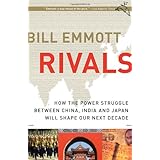
Rivals: How the Power Struggle Between China, India and Japan Will Shape Our Next Decade ReviewThe central thesis of this book is that the rise of Asia is going to pit Asians against Asians. A new power game is under way between Japan, China and India: for the first time in history, three great nations in Asia are vying for regional supremacy all at the same time. Japan used to be number one and cannot content itself with being a distant number two. China and India both think that the future belongs to them: they cannot both be right at the same time. As Bill Emmott puts it, "the balance between the regional powers is going to become the crucial determinant of whether Asia's rise will be one of peace and prosperity or one that brings conflict and turbulence, both to the region itself and to the world as a whole."
Bill Emmott sees proof of this emerging rivalry in the hedging strategy of the world superpower. The United States can no longer rely on a regional triangle with one ally, one competitor and one neutral third party: they need to ally with two powers in order to keep the third one neutral. This is why Bush, in his landmark visit to India in March 2006, chose to sideline concerns about nuclear proliferation and signed a deal for extended cooperation with India, including in the field of civil nuclear energy. India is a country with the potential to balance the rising power of China, and it is courted as such by the US, but also by Japan and the ASEAN countries which agreed, against all common geographical sense, to include the South Asian giant in their new East Asian Summit caucus.
Although the rivalry thesis is worth considering, I found the whole thing a little bit oversold. For a start, it is by no means the only thread to the story, but rather an editing gimmick that provides a catchy headline to a book that is basically a survey about the three great Asian powers. The individual chapters on China, Japan and India are valuable in their own right: they are written in the no-nonsense, right-to-the-point style that is the hallmark of The Economist, where they each could have been included as special country surveys.
There is an interesting discussion on Chinese statistics, where one learns for instance that in 2005 twenty-nine out of thirty-one regions reported "higher than average" growth rates. Contrary to the myth of unlimited labor supply from the Chinese countryside, the author thinks that the combination of higher incomes from agriculture and low birth rates will likely lead to less migrant labor and rising wages. Emmott today encounters in Beijing the same lack of transparency and accountability, the same feeling of self-confidence and even arrogance among senior officials, the same over-investment and misallocation of capital that he used to confront in Japan twenty years ago. Now Japan worries whether its credit rating will fall above or below Botswana, and it is dismissed by foreigners as a greying and declining nation.
The author of The Sun Also Sets nevertheless thinks that Japan could rebound if it succeeds in reinventing itself, like America did during the decade of the "new economy" which brought a sharp and unexpected jump in its productivity levels. He also thinks that with the right reforms, India could achieve growth of more than ten percent for at least a decade, provoking a transformation of a magnitude comparable to what China experienced in the last twenty years. As he notes, "the process of economic growth is in part a process of removing obstacles, rather as the dredging of boulders from a river will permit the water to flow more smoothly. There are a lot of obstacles to be removed, so there is a lot of potential for improvement."
Rivalry between the three Asian powers is therefore not the whole story. Indeed, it could be argued that the rise of new powers, like China and India, is more likely to lead to stabilization and peace than to disruption and war. China's trade (imports plus exports) is equivalent to 67 percent for GDP, whereas the ratio is 22 percent for America and 28 percent for Japan. The greater openness of China's economy, although it is still smaller than Japan's, means that China has more trade and investment with its smaller Asian neighbors and with the rest of the world than Japan does, often resulting in greater influence, as the flag follows foreign trade. A few decades ago, neighboring countries viewed the rise of Japan as stifling their economic independence. There was a time when European multinationals marketed themselves as an alternative to an exclusive reliance on Japanese firms. Now many view the rise of China as creating competition and thereby liberating them. Contrary to Japan's, Chinese trade is a two-way street, and it offers a great market for exports from its neighbors.
As Bill Emmott notes, Asia is piled high with historical bitterness, unresolved territorial disputes, potential flash points and strategic competition that could readily ignite even during the next decade. But the potential for cooperation is also great, and the sweetener of commerce should soothe nationalistic hurdles and instead promote a healthy spirit of competition in which all partners will gain.Rivals: How the Power Struggle Between China, India and Japan Will Shape Our Next Decade Overview

Want to learn more information about Rivals: How the Power Struggle Between China, India and Japan Will Shape Our Next Decade?

>> Click Here to See All Customer Reviews & Ratings Now
Read More...

After Leaning to One Side: China and Its Allies in the Cold War (Cold War International History Project) Review

After Leaning to One Side: China and Its Allies in the Cold War (Cold War International History Project)
Average Reviews:

(More customer reviews)
Are you looking to buy After Leaning to One Side: China and Its Allies in the Cold War (Cold War International History Project)? Here is the right place to find the great deals. we can offer discounts of up to 90% on After Leaning to One Side: China and Its Allies in the Cold War (Cold War International History Project). Check out the link below:

>> Click Here to See Compare Prices and Get the Best Offers

After Leaning to One Side: China and Its Allies in the Cold War (Cold War International History Project) ReviewAs an well-known and influential scholar of the Cold War history, Shen Zhihua wrote an excellent book with his the latest research achievement. Based on the analysis towards the relevant archives from Russia, China and other countries, this is an crucial book for people who are interested in Chinese modern histoy, the Cold War history and the Soviet Union history. I am pretty sure that you will enjoy this book as well!After Leaning to One Side: China and Its Allies in the Cold War (Cold War International History Project) Overview

Want to learn more information about After Leaning to One Side: China and Its Allies in the Cold War (Cold War International History Project)?

>> Click Here to See All Customer Reviews & Ratings Now
Read More...

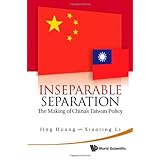
Inseparable Separation: The Making of China's Taiwan Policy Review

Inseparable Separation: The Making of China's Taiwan Policy
Average Reviews:

(More customer reviews)
Are you looking to buy Inseparable Separation: The Making of China's Taiwan Policy? Here is the right place to find the great deals. we can offer discounts of up to 90% on Inseparable Separation: The Making of China's Taiwan Policy. Check out the link below:

>> Click Here to See Compare Prices and Get the Best Offers

Inseparable Separation: The Making of China's Taiwan Policy ReviewThis book is a real eye-opener in terms of its great archival research and insightful analysis. Some of the firsthand archival materials used in the book have never been published before in any English sources, including:
(1) how Mao Zedong and Chiang Kai-shek maintained secret contact through the 1950s and 1960s, and how they had, despite outward belligerency toward each other, secretly joined hands in preserving Taiwan's status as part of China;
(2) how, during the 1980s, Chiang Ching-kuo, then president of the Republic of China on Taiwan, had maintained secret contact with Communist leaders in Beijing, and had moved very close to achieving a reconciliation with Mainland China;
(3) how Chinese leaders had outwardly clamored for a quick reunification with Taiwan, while inwardly adopting a very gradualist and patient approach on the issue;
(4) how Beijing has endeavored to create a common interest with Washington in preserving peace and stability in the Taiwan Strait, despite China's customary insistence that the Taiwan issue is an internal Chinese affair and that it would not brook any outside interference;
(5) last but not least, why Beijing is extremely unlikely to use force against Taiwan for the foreseeable future, as long as Taiwan does not revise its current constitution to eliminate traces of the one-China concept.
The authors are fair and well-balanced in their analysis and do not particularly favor either Beijing's or Taipei's position. Highly recommended.Inseparable Separation: The Making of China's Taiwan Policy Overview

Want to learn more information about Inseparable Separation: The Making of China's Taiwan Policy?

>> Click Here to See All Customer Reviews & Ratings Now
Read More...

Wellington Koo: China: Makers of the Modern World Review

Wellington Koo: China: Makers of the Modern World
Average Reviews:

(More customer reviews)
Are you looking to buy Wellington Koo: China: Makers of the Modern World? Here is the right place to find the great deals. we can offer discounts of up to 90% on Wellington Koo: China: Makers of the Modern World. Check out the link below:

>> Click Here to See Compare Prices and Get the Best Offers

Wellington Koo: China: Makers of the Modern World ReviewThis well written and thoroughly engaging biography of Wellington Koo, China's first representative to the League of nations, provides real insight to that fascinating period of China and her relationships with the rest of the world. This book is part of a series of biographies of peacemakers participated in the Paris Peace Conference of 1919-20. I look forward to reading others in the series.Wellington Koo: China: Makers of the Modern World Overview

Want to learn more information about Wellington Koo: China: Makers of the Modern World?

>> Click Here to See All Customer Reviews & Ratings Now
Read More...

On China Review

On China
Average Reviews:

(More customer reviews)
Are you looking to buy On China? Here is the right place to find the great deals. we can offer discounts of up to 90% on On China. Check out the link below:

>> Click Here to See Compare Prices and Get the Best Offers

On China Review
Prior to the publication of this book the definitive resource on China was Jonathan Spence's "In Search of Modern China". Spence the Yale Professor, is still indispensible to a modern understanding of this remarkable country. Now there is a second more up to date source and that is Henry Kissinger. The former Secretary of State who is now 88 years fortunately has taken the time to put together this incredible piece of work that only he could have created. The book demonstrates the necessity of having lived a very long productive life and generating wisdom capable of distilling his understanding of a country down to a 530 page volume of work. It is as good as any of his previous works (13 with this one) and for my money I now put this book in Kissinger's top three, along with WHITE HOUSE YEARS and DIPLOMACY. First the MECHANICS of the BookIf you are going to read the hard copy as opposed to digital, you are in for a treat. The font is beautiful, and the paper used to print the volume is delicious. I say this because if you are a heavy reader; you really appreciate turning the pages of beautifully textured pages. I annotate all of my books, writing in margins, in the back on blank pages and just about everywhere, and I love writing on beautiful page that take the ink nicely. This book was crafted professionally as good as it gets. The ORGANIZATION of On ChinaThe Secretary has made 40 trips to China in his lifetime, enough that he should be the Honorary Ambassador to the country. He is thoroughly infused in the history of China, and he certainly does give you the history. There are 18 chapters plus an epilogue spread over 531 pages. There are 36 pages of footnotes and it is obvious that the Secretary had considerable organizational help with the footnotes which is to be expected.
The first three chapters or 91 pages are devoted to the nation's history and Kissinger gets it right. I have made many trips to China, but I still have problems with the language. When you read any book on China, you will have problems with pronunciation. What I do is quickly scan the book writing down 50 or a 100 names or terms I can't pronounce, and then head for the first Chinese restaurant in town, and ask for help with the words. People love to help, especially when you are taking an interest in their culture and language. The guts of the book begins on page 91 or Chapter 4 which is Mao's Continuous Revolution. This chapter is superb and superbly written. If you study American China relations, the question that is always stipulated is whether or not America lost China in 1949. Kissinger correctly reminds us that China might never have been ours to lose, so we asking the wrong question. Mao always believed that the Confucian order had for thousands of years kept China a weak China. Confucius preached HARMONY, and Mao believed that progress could only come from brutal confrontations both in China and with outside adversaries for China to advance. Mao also believed that these confrontations would happen naturally, but if they did not, he was not beyond creating confrontations even if they had to be within the Communist party to kept progress going, as he understood progress.

Chapter 6 which deals with China Confronts Both Superpowers is another section that only Kissinger could have written. It is here that China confronts the Soviet Union creating the Sino-Soviet split, and the United States with the Taiwan Strait Crisis. The chapter is riveting, and will affect and change your understanding of history. MY ANALYSIS The book is indispensible. You cannot understand China and modern Asia without having this book under your belt. One would have to be foolish to visit China and not read this book first to truly benefit from such a trip. Mao was famous for the Long March, and this book is a long journey for the reader but it is very rewarding. The Secretary takes us through the Road to Reconciliation in Chapter 8, and then the first encounters with Nixon, himself and the Chinese leadership in Chapter 9. It is a fascinating portrayal of power meeting power head to head, and the respect that even enemies can hold for each other. It is now generally accepted that only Nixon the hardened right winger could have opened the door to China and brought the American people along with him, because he Nixon was viewed as tough. Perhaps in a decade or two, Harvard will accept what most historians have already accepted.

In Chapter 11 we witness the End of the Mao Era. Zhou Enlai falls and Deng's first return to power begins. Kissinger loves writing about Deng and calls him the indestructible Deng throughout chapter 12. Keep in mind that it was Deng who opened up modern China and began the reforms that were necessary for China to assert itself years later internationally and economically. For those readers that know very little of China, this book is a whirlwind tour of a country fast gaining hegemony over Asia. You need to read Chapter 13 on the Third Viet Nam to understand how China is capable of dealing with its neighbors. Had we handled Viet Nam this way, the outcome and history would have been different. CONCLUSION:Henry Kissinger ON CHINA is destined to become a best seller and in the process will greatly help an America that knows very little about China except for newspapers, to understand not just the history of this vital country, but its future and the nexus of that future with America's future. No one can ignore China, so the sooner we as Americans gain the understanding that we need to make intelligent decisions, the better off we will all be. If you have an interest in China whatsoever, run to read this book, and do not put it down until you are finished with it. Good luck and thank you for reading this review. Richard C. Stoyeck ASSIDE: I will share something extraordinary with you. When you read a book like this, you will have a better understanding of China than 98% of the people living in China and 95% of the Chinese people living in America. I am still shocked when I meet Chinese people in this country young and old who have next to no understanding of Chinese history prior to Mao. They do not know the name Sun Yat-sen, or even Zhou Enlai, and forget about the Cultural Revolution unless they lived through it. Even the tragedy of Tiananmen Square is fast fading from memory.

It reminds me of German history in the post Hitler period. Anybody in Germany who was educated post 1950 has very little to no understanding of the Hitler period. It is simply glossed over as a dark period in German history; the teachers do not know what to say. Just amazing.
On China Overview

Want to learn more information about On China?

>> Click Here to See All Customer Reviews & Ratings Now
Read More...